Kitchen remodel return on investment is the share of a project's cost that comes back as added resale value, and it is the first…
Articles
Two Tone Kitchen Cabinets: 6 Color Combinations for a Timeless Kitchen
Two tone kitchen cabinets use two colors or finishes on the same cabinetry, usually split between the upper and lower cabinets or between the perimeter and the island, to add depth that a single color cannot. The challenge is choosing a pairing that still looks right in ten years, not just this year. Picking the right pair is one of the most visible decisions in designing a kitchen you will still love in ten years, and this guide walks through six combinations that hold up. In this blog, we cover:
- What two tone cabinets are and why they work
- Six color combinations that stay timeless
- Where each color goes: uppers, lowers, or the island
- How to choose colors, hardware, and finishes that work together
- Common questions about trends, resale, and cost
What Are Two Tone Kitchen Cabinets, and Why Do They Work?
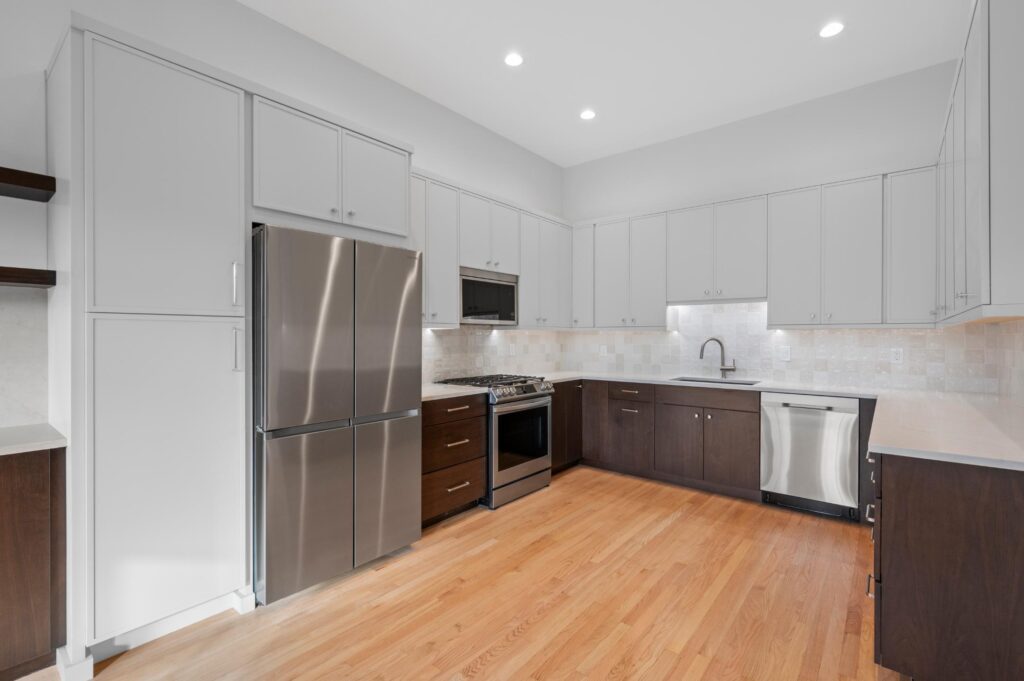
Two tone kitchen cabinets are cabinets finished in two different colors or materials, most often one color on the upper cabinets and another on the lower cabinets or island. The contrast adds depth, breaks up long cabinet runs, and makes a kitchen feel designed instead of uniform.
The pairing is already common among renovating homeowners. According to the 2025 Houzz Kitchen Trends Study, 24% of renovating homeowners choose contrasting colors for their upper and lower cabinets, with white the top pick for uppers at about 2 in 5 homeowners and wood tones leading for lowers at 33%, which is why white uppers over wood or color lowers is the most familiar pairing.
We are proud to serve homeowners in Downers Grove, IL, and nearby communities with full design-build kitchen remodeling, and every cabinet color pairing is reviewed in a 3D render before materials are ordered.
6 Color Combinations for Two Tone Kitchen Cabinets That Stay Timeless
Each pairing below follows one rule: keep one color anchored and let the second color do the work. Pick the one that matches your light, your layout, and how bold you want the kitchen to feel.
| Combination | Where Each Color Goes | Best For |
| White and natural wood | White uppers, wood lowers | Warm, bright kitchens |
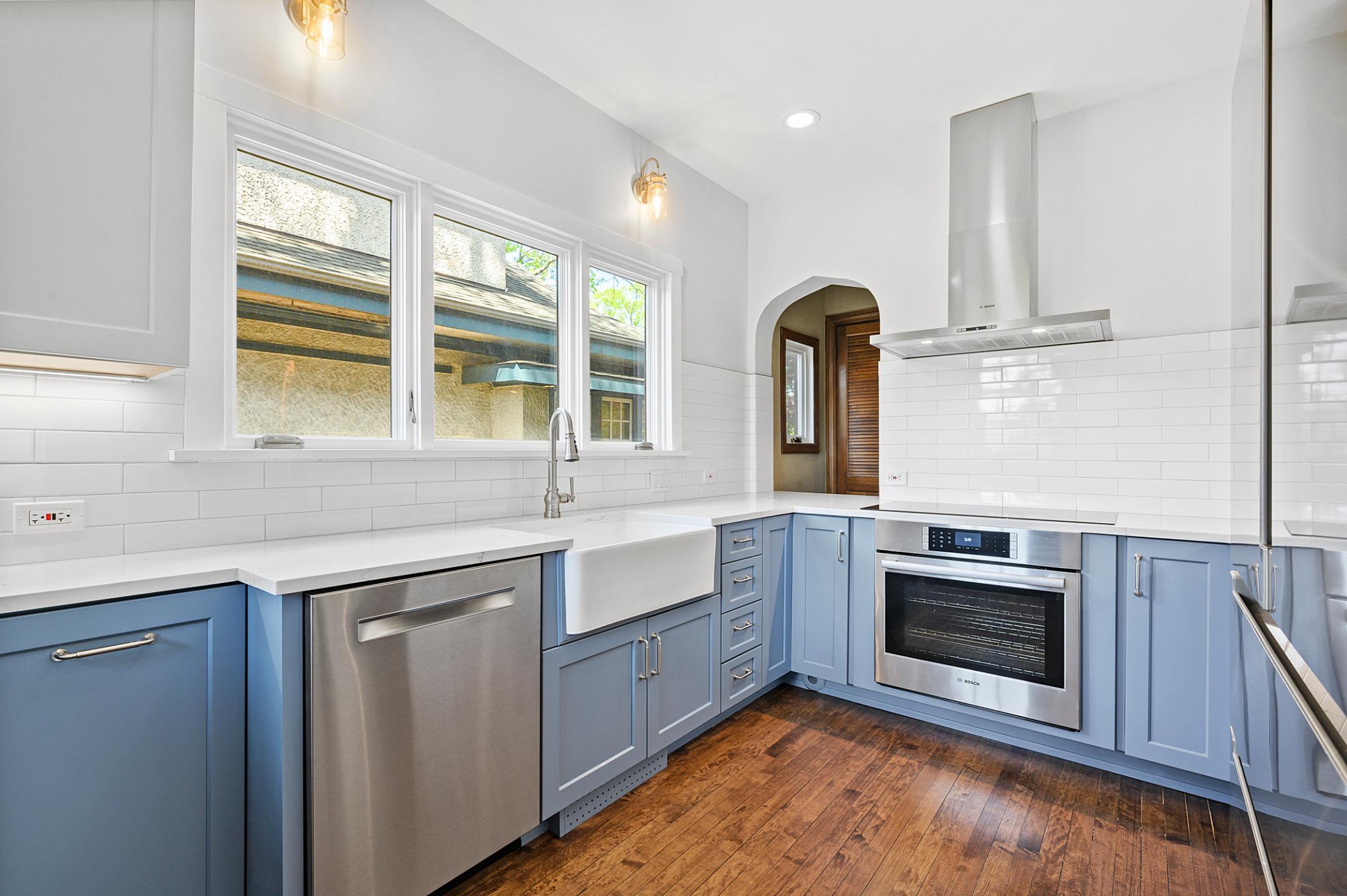
| White and navy | White uppers, navy lowers or island | Classic contrast |
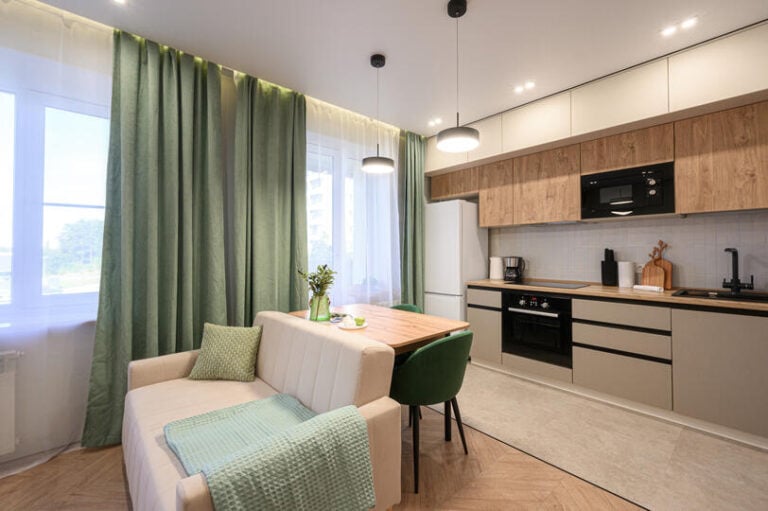
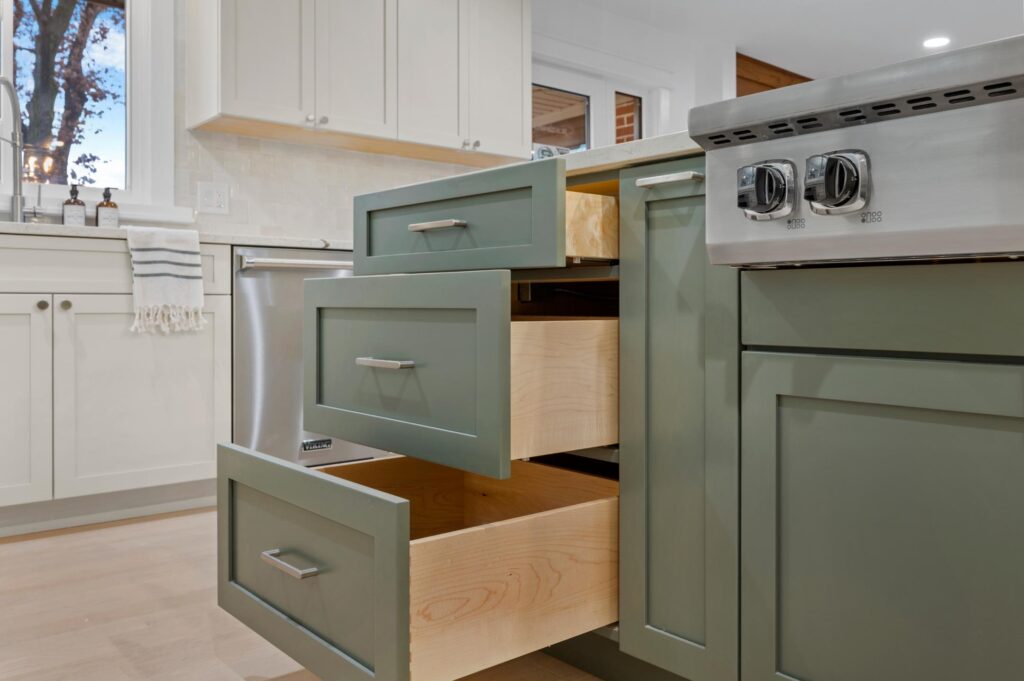
| White and sage green | White uppers, green lowers or island | Soft, natural looks |
| Cream and charcoal | Cream uppers, charcoal lowers | Traditional homes |
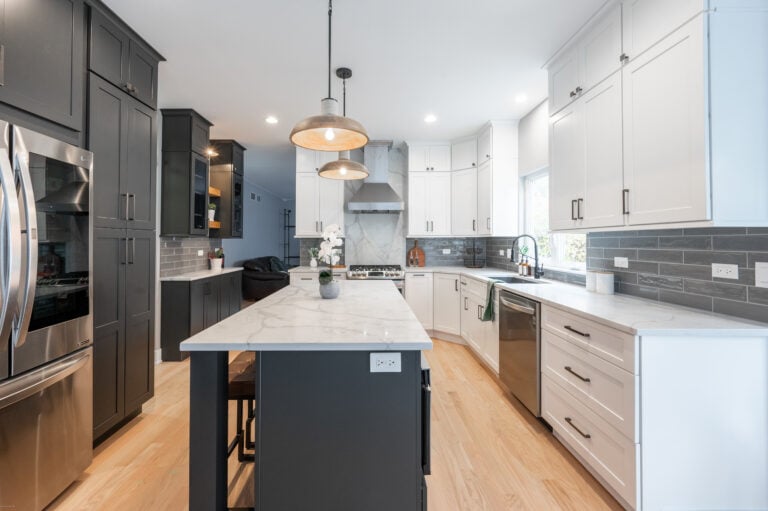
| Gray and black | Gray perimeter, black island | Modern kitchens |
| Wood and white | Wood perimeter, white island | Open layouts |
1. White and Natural Wood
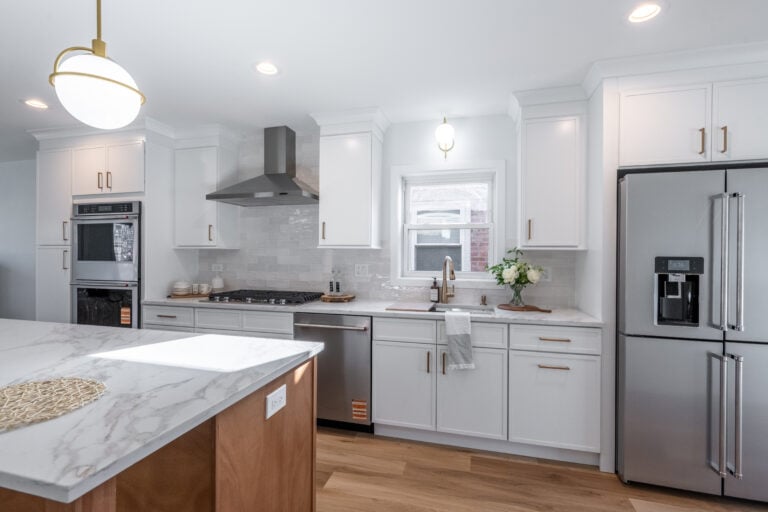
White uppers with natural wood lowers is the most familiar two tone pairing: white keeps the room bright while wood adds warmth at counter height. It suits most kitchen styles and works with almost any countertop.
- Why it lasts: Both colors are neutral, so the pairing outlasts trends.
- Wood choice: Keep the wood tone close to the flooring or clearly different, so the two never look almost matched.
2. White and Navy
White and navy is a classic contrast pairing that puts deep blue on the lower cabinets or island and keeps white on top. Navy reads nearly neutral, so it anchors the kitchen without feeling heavy.
- Placement: Navy on the island alone gives the look with the least commitment.
- Hardware: Brass and brushed nickel both work well against navy.
3. White and Sage Green
White and sage green is a soft pairing that brings color into the kitchen without overpowering it. Green lowers or a green island keep the room calm and connect it to natural materials like wood and stone.
- Color depth: Muted, gray-leaning greens age better than bright ones.
- Countertop match: Warm white or softly veined quartz complements sage.
4. Cream and Charcoal
Cream and charcoal is a traditional high-contrast pairing: warm cream uppers over deep charcoal lowers. It suits older Chicago-area homes with detailed millwork, where pure white can feel stark.
- Warm uppers: Cream softens the contrast and suits raised panel or Shaker doors.
- Dark lowers: Charcoal hides daily wear at the level where it happens.
5. Gray and Black Island
Gray perimeter cabinets with a black island is a modern pairing that makes the island the focal point of the kitchen. The gray stays quiet while the black gives the room a clear center.
- Focal point: The island draws the eye so the perimeter can stay simple.
- Light balance: Black works best in kitchens with plenty of daylight or layered lighting.
6. Wood Perimeter and White Island
A wood perimeter with a white island reverses the usual pattern, using warm wood on the walls and a white island that reads as a bright centerpiece. It works well in open layouts where the island faces the living space.
- Open layouts: The white island separates the kitchen from the living area without a wall.
- Balance: Repeat the wood somewhere else, such as shelving or stools, so it does not feel isolated.
How Do You Choose Colors for Two Tone Kitchen Cabinets?
Most successful two tone kitchens follow three simple rules: one dominant color, one accent color, and one shared undertone. Getting those right matters more than the specific colors you pick.
Which Cabinets Should Be the Darker Color?
Dark colors usually go on the lower cabinets or the island, with lighter colors above, because dark lowers ground the room and light uppers keep it open. Reversing the pattern can work, but it makes the room feel lower.
- Grounded base: Dark lowers anchor the kitchen visually.
- Open top: Light uppers keep walls and ceilings feeling tall.
How Do You Keep Two Colors From Clashing?
Keep two colors from clashing by sharing an undertone, warm or cool, between both, and by repeating one hardware finish across all the cabinets. A countertop that bridges both colors finishes the look.
- Shared undertone: Mixing warm and cool tones is the most common cause of a mismatched look.
- One hardware finish: Repeating the same pulls and knobs ties both colors together.
When Should Cabinet Colors Be Decided?
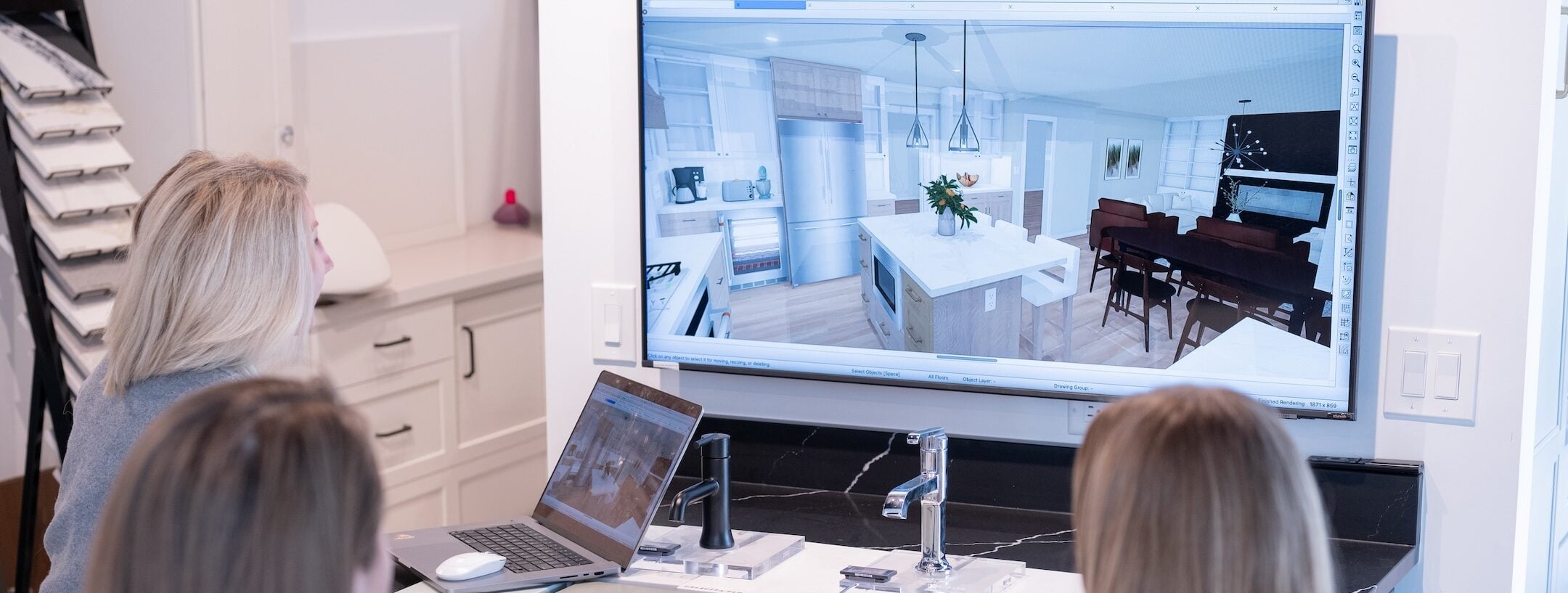
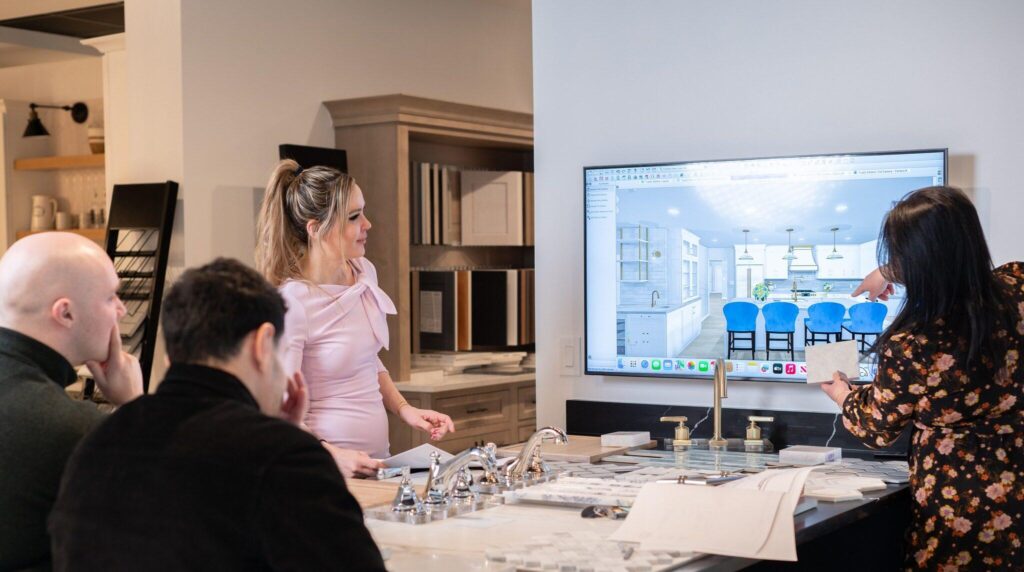
Cabinet colors should be decided in the design phase, before any materials are ordered, because a color that looks right in a showroom can read differently beside your counters, backsplash, and flooring. At 4Ever Remodeling, cabinet pairings are reviewed in the 3D render and during design studio selections, so the combination is approved on screen first.
- Sample in your light: Daylight and fixtures change how every color reads.
- Full kitchen context: Judge the pairing beside the counters, tile, and floor, not on its own.
Common Questions About Two Tone Kitchen Cabinets
Two tone cabinets raise a consistent set of questions, especially around trends, resale, and cost. Here are the ones Downers Grove homeowners ask most often.
Are two tone kitchen cabinets still in style?
Yes. Two tone cabinets remain popular, and white uppers with wood or color lowers is the most common pairing among homeowners who choose contrasting colors.
Do two tone cabinets hurt resale value?
Not typically. Classic pairings like white and wood or white and navy are broadly appealing, and the quality of the finish matters more than the number of colors.
How many colors should a kitchen have?
Two cabinet colors is the standard. A third color or material is best limited to accents such as open shelving, hardware, or the backsplash.
Can I do two tone cabinets with just the island?
Yes. Finishing only the island in a second color is the simplest two tone approach and the lowest commitment.
How much do two tone kitchen cabinets cost?
Two tone cabinets are a finish and design choice within the kitchen scope, so they are planned as part of the overall remodel instead of priced alone. At 4Ever Remodeling, kitchen remodels in a 70 to 100 square foot kitchen start at $55K for Pull and Replace, $65K for Signature, and $85K for Custom. Visit the kitchen remodeling pricing page for the full breakdown by kitchen size.
Choose Cabinet Colors You Will Love With 4Ever Remodeling
A two tone kitchen works when the colors are chosen together with the counters, hardware, and lighting, not one at a time. That is how a kitchen ends up looking timeless instead of trendy.
At 4Ever Remodeling, we have been remodeling kitchens across the Chicago area since 2011, and every project is backed by a three-year labor warranty.
Ready to see your cabinet colors together in 3D before anything is ordered? Plan your color pairing with our designers and schedule your design consultation today.

Written By: 4Ever Remodeling
Recent Articles